All posts by Markus DaSilva

0001 – Post about the Law of God: God knows that no human creature can perfectly obey…

0001 - Post about the Law of God: God knows that no human creature can perfectly obey...

God knows that no human creature can perfectly obey His laws without ever sinning. For this reason, from Eden to Sinai and culminating at Calvary, the atoning sacrifice has been part of the plan for humanity’s restoration. The argument of those who promote the doctrine of “unmerited favor,” claiming that obedience to the laws of the Old Testament is unnecessary because no one can fully keep them, is completely unfounded. The blood of the Lamb is reserved for those who, even while sincerely striving to follow God’s laws, stumble and need forgiveness. Not a single drop of Christ’s blood will be applied to those who blatantly disregard the holy and eternal Law of the Lord. Do not follow the majority just because they are many. | “You have ordained your commandments, that we should keep them diligently.” (Psalm 119:4)


Do your part in God’s work. Share this message!

⬅️ Previous post  |  Next post ➡️

Appendix 8i: The Cross and the Temple

Listen or download this study in audio
00:00
00:00DOWNLOAD

This page is part of a series exploring the laws of God that could be obeyed only when the Temple was present in Jerusalem.

The Cross and the Temple are not enemies, and they are not two “phases” where one cancels the other. The Law of God is eternal (Psalm 119:89; 119:160; Malachi 3:6). The Temple system, with its sacrifices, priests, and purity laws, was given by that same eternal Law. The death of Jesus did not abolish a single commandment. It revealed the true depth of what those commandments were already saying. The Temple was not destroyed to end sacrifices, but as judgment for disobedience (2 Chronicles 36:14-19; Jeremiah 7:12-14; Luke 19:41-44). Our task is to hold these truths together without inventing a new religion that replaces the Law with human ideas about the Cross.

The apparent conflict: the Lamb and the altar

At first glance, there seems to be a conflict:

  • On one side, the Law of God commanding sacrifices, offerings, and priestly service. (Leviticus 1:1-2; Exodus 28:1)
  • On the other, Jesus presented as “the Lamb of God, who takes away the sin of the world” (John 1:29; 1 John 2:2).

Many people jump to a conclusion the Scriptures never make: “If Jesus is the Lamb, then the sacrifices are over, the Temple is finished, and the Law that commanded them no longer matters.”

But Jesus Himself refused that logic. He said plainly that He did not come to abolish the Law or the Prophets, and that not even the smallest stroke would fall from the Law until heaven and earth pass away (Matthew 5:17-19; Luke 16:17). Heaven and earth are still here. The Law still stands. The commandments about sacrifices, offerings, and the Temple were never revoked by His lips.

The Cross does not erase the Temple laws. The Cross reveals what they were truly pointing to.

Jesus as the Lamb of God — fulfillment without cancellation

When John called Jesus “the Lamb of God” (John 1:29), he was not announcing the end of the sacrificial system. He was declaring the true meaning of every sacrifice that had ever been offered by faith. The blood of animals never had power by itself (1 Peter 1:19-20). Its power came from obedience to God and from what it represented: the future sacrifice of the true Lamb. God does not speak one thing and later contradict Himself (Numbers 23:19).

From the beginning, forgiveness has always depended on two things working together:

  • Obedience to what God commanded (Deuteronomy 11:26-28;  Ezekiel 20:21)
  • The provision God Himself appointed for cleansing (Leviticus 17:11; Hebrews 9:22)

In ancient Israel, the obedient went to the Temple, presented sacrifices as the Law required, and received real, but temporary, covenantal cleansing. Today, the obedient are led by the Father to the true Lamb, Jesus, for eternal cleansing (John 6:37; 6:39; 6:44; 6:65; 17:6). The pattern is the same: God never cleanses the rebellious (Isaiah 1:11-15).

The fact that Jesus is the true Lamb does not tear up the commandments about sacrifice. It proves that God was never playing with symbols. Everything in the Temple was serious, and everything pointed to something real.

Why sacrifices continued after the Cross

If God intended to abolish the sacrifices the moment Jesus died, the Temple would have fallen that same day. Instead, what happened?

  • The veil in the Temple was torn (Matthew 27:51), but the building remained standing while worship continued there (Acts 2:46; 3:1; 21:26).
  • Sacrifices and Temple rites continued daily (Acts 3:1; 21:26), and the entire narrative of Acts assumes a functioning sanctuary.
  • The priesthood continued serving (Acts 4:1; 6:7).
  • The festivals continued to be observed in Jerusalem (Acts 2:1; 20:16).
  • Even after the resurrection, believers in Jesus were still seen in the Temple (Acts 2:46; 3:1; 5:20-21; 21:26), and thousands of Jews who believed in Him were “all zealous for the Law” (Acts 21:20).

Nothing in the Law, nothing in the words of Jesus, and nothing in the prophets announced that sacrifices would instantly become sinful or invalid once the Messiah died. There is no prophecy that says, “After My Son dies, you shall stop bringing animals, for My Law about sacrifice is abolished.”

Instead, the Temple services continued because God is not double-tongued (Numbers 23:19). He does not command something as holy and then quietly treat it as unclean because His Son has died. If the sacrifices had become rebellion the moment Jesus died, God would have said so clearly. He did not.

The continuation of the Temple service after the Cross shows that God had never canceled any commandment tied to the sanctuary. Every offering, every purification rite, every priestly duty, and every national act of worship remained in force because the Law that established them remained unchanged.

The symbolic nature of the sacrificial system

The entire sacrificial system was symbolic in its design, not because it was optional or lacked authority, but because it pointed to realities that only God Himself would one day bring to completion. The healings it affirmed were temporary — the healed could become sick again. The ceremonial cleansings restored purity only for a time — impurity could return. Even the sacrifices for sin brought forgiveness that had to be sought again and again. None of these things were the final removal of sin or death; they were divinely commanded symbols pointing toward the day when God would destroy death itself (Isaiah 25:8; Daniel 12:2).

The Cross made that finality possible, but the true end of sin will only be seen after the final judgment and the resurrection, when those who have done good rise to the resurrection of life and those who have done evil to the resurrection of judgment (John 5:28-29). Only then will death be swallowed up forever. Because the Temple services were symbols pointing to eternal realities, and not the realities themselves, Jesus’ death did not make them unnecessary. They remained in force until God removed the Temple in judgment — not because the Cross canceled them, but because God chose to cut off the symbols while the realities they pointed to still await His final completion at the end of the age.

How forgiveness works today

If the commandments about sacrifices were never abolished, and if the Temple system continued even after the cross — until God Himself brought it to an end in 70 A.D., a natural question arises: How can anyone be forgiven today? The answer is found in the same pattern God established from the beginning. Forgiveness has always come by obedience to God’s commandments (2 Chronicles 7:14; Isaiah 55:7) and by the sacrifice that God Himself appointed (Leviticus 17:11; ). In ancient Israel, the obedient received ceremonial cleansing at the altar in Jerusalem, which the Law carried out primarily through the shedding of blood (Leviticus 4:20; 4:26; 4:31; Hebrews 9:22). Today, the obedient are cleansed through the sacrifice of the Messiah, the true Lamb of God who takes away sin (John 1:29).

This does not represent a change in the Law. Jesus did not cancel the sacrificial commandments (Matthew 5:17-19). Instead, when God removed the Temple, He changed the outward place where obedience meets cleansing. The criteria remained the same: God forgives those who fear Him and keep His commandments (Psalm 103:17-18; Ecclesiastes 12:13). No one comes to the Messiah unless the Father draws him (John 6:37; 6:39; 6:44;  6:65 17:6), and the Father draws only those who honor His Law (Matthew 7:21; 19:17; John 17:6; Luke 8:21; 11:28).

In ancient Israel, obedience led a person to the altar. Today, obedience leads a person to the Messiah. The outward scene has changed, but not the principle. The unfaithful in Israel were not cleansed by sacrifices (Isaiah 1:11-16), and the unfaithful today are not cleansed by the blood of Christ (Hebrews 10:26-27). God has always required the same two things: obedience to His Law and submission to the sacrifice He has appointed.

From the beginning, there has never been a moment when the blood of any animal, or the offering of any grain or flour, truly brought peace between a sinner and God. Those sacrifices were commanded by God, but they were not the true source of reconciliation. Scripture teaches that it is impossible for the blood of bulls and goats to take away sins (Hebrews 10:4), and that the Messiah was foreknown before the foundation of the world (1 Peter 1:19-20). Since Eden, peace with God has always come through the perfect, sinless, only begotten Son (John 1:18; 3:16) — the One to whom every sacrifice pointed (John 3:14-15; 3:16). The physical offerings were material signs that allowed humans to see, touch, and feel the seriousness of sin, and to understand in earthly terms the cost of forgiveness. When God removed the Temple, the spiritual reality did not change. What changed was the material form. The reality remained exactly the same: it is the sacrifice of the Son that brings peace between the offender and the Father (Isaiah 53:5). The outward symbols ceased because God chose to remove them, but the inward reality — the cleansing provided through His Son to those who obey Him — continues unchanged (Hebrews 5:9).

Why God destroyed the Temple

If the destruction of the Temple in 70 A.D. had been meant to “abolish sacrifices,” the Scriptures would say so. They do not. Instead, Jesus Himself explained the reason for the coming destruction: judgment.

He wept over Jerusalem and said that the city did not recognize the time of its visitation (Luke 19:41-44). He warned that the Temple would be brought down stone by stone (Luke 21:5-6). He declared that the house was left desolate because of the refusal to listen to God’s messengers (Matthew 23:37-38). This was not the announcement of a new theology where sacrifices become evil. It was the old, familiar pattern of judgment: the same reason the first Temple was destroyed in 586 B.C. (2 Chronicles 36:14-19; Jeremiah 7:12-14).

In other words:

  • The Temple fell because of sin, not because the Law changed.
  • The altar was removed because of judgment, not because sacrifices had become ungodly.

The commandments remained written, eternal as always (Psalm 119:160; Malachi 3:6). What God removed were the means by which those commandments could be carried out.

The Cross did not authorize a new religion without the Law

Most of what is called “Christianity” today is built on a simple lie: “Because Jesus died, the Law of sacrifices, the festivals, the purity laws, the Temple, and the priesthood have all been abolished. The Cross replaced them.”

But Jesus never said that. The prophets that prophecied about Him never said that. Instead, Christ was clear that His true followers must obey His Father commandment as given in the Old Testament, just like His apostles and disciples did (Matthew 7:21; 19:17; John 17:6; Luke 8:21; 11:28).

The Cross did not give anyone authority to:

  • Cancel the Temple laws
  • Invent new rituals like the communion service to replace Passover
  • Turn tithes into pastor salaries
  • Replace God’s purity system with modern teachings
  • Treat obedience as optional

Nothing about the death of Jesus authorizes men to rewrite the Law. It only confirms that God is serious about sin and serious about obedience.

Our posture today: obey what can be obeyed, honor what cannot

The Cross and the Temple meet in one unavoidable truth:

  • The Law remains untouched (Matthew 5:17-19; Luke 16:17).
  • The Temple has been removed by God (Luke 21:5-6).

That means:

  • The commandments that can still be obeyed must be obeyed, without excuses.
  • The commandments that depend on the Temple must be honored as written but not practiced, because God Himself removed the altar and the priesthood.

We do not rebuild a human version of the sacrificial system today, because God has not restored the Temple. We do not declare the sacrificial laws abolished, because God never canceled them.

We stand between the Cross and the empty Temple mount with fear and trembling, knowing that:

  • Jesus is the true Lamb who cleanses those who obey the Father (John 1:29; 6:44).
  • The Temple laws remain written as eternal statutes (Psalm 119:160).
  • Their present impossibility is the result of God’s judgment, not our permission to invent replacements (Luke 19:41-44; 21:5-6).

The Cross and the Temple together

The right path refuses both extremes:

  • Not “Jesus abolished the sacrifices, so the Law no longer matters.”
  • Not “We should rebuild sacrifices now, in our own way, without God’s Temple.”

Instead:

  • We believe that Jesus is the Lamb of God, sent by the Father for those who obey His Law (John 1:29; 14:15).
  • We accept that God removed the Temple as judgment, not abolition (Luke 19:41-44; Matthew 23:37-38).
  • We obey every commandment that remains physically possible today.
  • We honor the Temple-dependent commandments by refusing to replace them with human rituals.

The Cross does not compete with the Temple. The Cross reveals the meaning behind the Temple. And until God restores what He removed, our duty is clear:

  • Obey what can be obeyed.
  • Honor what cannot.
  • Never use the Cross as an excuse to change the Law that Jesus came to fulfill, not to destroy (Matthew 5:17-19).


Appendix 8h: Partial and Symbolic Obedience Related to the Temple

Listen or download this study in audio
00:00
00:00DOWNLOAD

This page is part of a series exploring the laws of God that could be obeyed only when the Temple was present in Jerusalem.

One of the greatest misunderstandings in modern religion is the belief that God accepts partial obedience or symbolic obedience in place of the commandments He gave. But the Law of God is precise. Every word, every detail, every boundary revealed through His prophets and through the Messiah carries the full weight of His authority. Nothing may be added. Nothing may be removed (Deuteronomy 4:2; 12:32). The moment a person decides that a part of God’s Law may be altered, softened, substituted, or re-imagined, he no longer obeys God—he obeys himself.

God’s precision and the nature of true obedience

God never gave vague commandments. He gave exact commandments. When He commanded sacrifices, He gave details about the animals, the priests, the altar, the fire, the location, and the timing. When He commanded festivals, He defined the days, the offerings, the purity requirements, and the place of worship. When He commanded vows, He defined how they begin, how they continue, and how they must end. When He commanded tithes and firstfruits, He defined what is brought, where it is brought, and who receives it. Nothing depended on human creativity or personal interpretation.

This precision is not accidental. It reflects the character of the One who gave the Law. God is never careless, never approximate, never open to improvisation. He expects obedience to what He commanded, not to what people wish He had commanded.

Therefore, when someone obeys a law partially—or replaces the required actions with symbolic actions—he is no longer obeying God. He is obeying a version of the command that he himself invented.

Partial obedience is disobedience

Partial obedience is the attempt to keep the “easy” or “convenient” elements of a command while discarding the elements that feel difficult, costly, or restrictive. But the Law does not come in fragments. To obey selectively is to refuse God’s authority over the parts being ignored.

God warned Israel repeatedly that refusing even a single detail of His commandments was rebellion (Deuteronomy 27:26; Jeremiah 11:3-4). Jesus confirmed the same truth when He said that whoever relaxes even the least commandment is called least in the kingdom of heaven (Matthew 5:17-19). The Messiah never granted permission to ignore the difficult parts while keeping the rest.

It is important for all to understand  that the Temple-dependent laws were never abolished. God removed the Temple, not the Law. When the Law cannot be obeyed in full, partial obedience is not an option. The worshipper must honor the Law by refusing to modify it.

Symbolic obedience is man-made worship

Symbolic obedience is even more dangerous. It occurs when a person tries to replace an impossible command with a symbolic act designed to “honor” the original law. But God did not authorize symbolic substitutes. He did not allow Israel to replace sacrifices with prayers or festivals with meditations when the Temple still stood. He did not permit symbolic Nazarite vows. He did not permit symbolic tithes. He never told anyone that outward rituals could be replaced by simplified versions that humans could perform anywhere.

To create symbolic obedience is to pretend that the physical impossibility of obedience caught God by surprise—as though God needs our help to “simulate” what He Himself removed. But this is an offense to God. It treats His commandments as flexible, His precision as negotiable, and His will as something that must be “assisted” by human creativity.

Symbolic obedience is disobedience because it replaces the command that God spoke with something He did not speak.

When obedience becomes impossible, God requires restraint, not replacement

When God removed the Temple, the altar, and the Levitical service, He made a decisive statement: certain commandments could no longer be carried out. But He did not authorize anything to take their place.

The correct response to a commandment that cannot be obeyed physically is simple:

Refrain from obeying until God restores the means of obedience.

This is not disobedience. It is obedience to the boundaries God Himself has established. It is fear of the Lord expressed through humility and restraint.

Inventing a symbolic version of the law is not humility—it is rebellion dressed as devotion.

The danger of “doable variations”

Modern religion often tries to create “doable variations” of commandments that God made impossible to perform:

  • A communion service invented to replace the Passover sacrifice
  • A 10 percent financial donation replacing the tithe God defined
  • Festival “rehearsals” replacing the commanded offerings in Jerusalem
  • Symbolic Nazarite practices replacing the actual vow
  • Ritual “purity teachings” replacing the biblical purity system

Each of these practices follows the same pattern:

  1. God gave a precise command.
  2. God removed the Temple, making obedience impossible.
  3. Humans invented a modified version they can perform.
  4. They call it obedience.

But God does not accept replacements for His commandments. He only accepts the obedience He Himself defined.

To create a replacement is to imply that God made a mistake—that He expected continued obedience but failed to preserve the means of obedience. It treats human ingenuity as a solution to a “problem” God supposedly overlooked. This is an insult to God’s wisdom.

Obedience today: honoring the Law without altering it

The correct posture today is the same posture required throughout Scripture: obey everything God has made possible, and refuse to alter what He has not made possible.

  • We obey the commandments that do not depend on the Temple.
  • We honor the commandments that do depend on the Temple by refusing to modify them.
  • We reject partial obedience.
  • We reject symbolic obedience.
  • We fear God enough to obey only what He commanded, in the way He commanded it.

This is true faith. This is true obedience. Anything else is man-made religion.

The heart that trembles at His Word

God is pleased with the worshipper who trembles at His Word (Isaiah 66:2) — not the worshipper who remodels His Word to make it convenient or possible. A humble person refuses to invent new laws to replace those God has temporarily placed beyond reach. He recognizes that obedience must always match the command that God actually spoke.

The Law of God remains perfect. Nothing has been abolished. But not every command can be obeyed today. The faithful response is to refuse partial obedience, reject symbolic obedience, and honor the Law exactly as God gave it.


Appendix 8g: Nazarite and Vow Laws – Why They Cannot Be Kept Today

Listen or download this study in audio
00:00
00:00DOWNLOAD

This page is part of a series exploring the laws of God that could be obeyed only when the Temple was present in Jerusalem.

The laws of vows, including the Nazarite vow, show how deeply certain commandments of the Torah depend on the Temple system established by God. Since the Temple, the altar, and the Levitical priesthood have been removed, these vows cannot be completed today. The modern attempts to imitate or “spiritualize” these vows—especially the Nazarite vow—are not obedience but inventions. The Law defines what these vows are, how they begin, how they end, and how they must be completed before God. Without the Temple, no vow of the Torah can be fulfilled as God commanded.

What the Law commanded about vows

The Law takes vows with absolute seriousness. When a person made a vow to God, the vow became a binding obligation that had to be fulfilled exactly as promised (Numbers 30:1-2; Deuteronomy 23:21-23). God warned that delaying or failing to fulfill a vow was sin. But the fulfillment of a vow was not merely inward or symbolic—it required action, offerings, and the involvement of God’s sanctuary.

Many vows included sacrifices of thanksgiving or freewill offerings, meaning that the vow had to be fulfilled at the altar of God in the place He chose (Deuteronomy 12:5-7; 12:11). Without the altar, no vow could be brought to completion.

The Nazarite vow: a Temple-dependent law

The Nazarite vow is the clearest example of a commandment that cannot be fulfilled today, even though several outward behaviors associated with it can still be imitated. Numbers 6 describes the Nazarite vow in detail, and the chapter makes a clear distinction between the outward signs of separation and the requirements that make the vow valid before God.

The outward signs include:

  • Separating from wine and all grape products (Numbers 6:3-4)
  • Allowing the hair to grow with no razor upon the head (Numbers 6:5)
  • Avoiding corpse impurity (Numbers 6:6-7)

But none of these behaviors create or complete a Nazarite vow. According to the Law, the vow only becomes complete—and only becomes acceptable before God—when the person goes to the sanctuary and presents the required offerings:

  • The burnt offering
  • The sin offering
  • The fellowship offering
  • The grain and drink offerings

These sacrifices were commanded as the essential conclusion of the vow (Numbers 6:13-20). Without them, the vow remains unfinished and invalid. God also required additional offerings if accidental impurity occurred, meaning the vow cannot continue or restart without the Temple system (Numbers 6:9-12).

This is why the Nazarite vow cannot exist today. A person may imitate certain outward actions, but he cannot enter, continue, or complete the vow that God defined. Without the altar, the priesthood, and the sanctuary, there is no Nazarite vow—only human imitation.

How Israel obeyed

Faithful Israelites who took a Nazarite vow obeyed the Law from beginning to end. They separated themselves during the days of the vow, avoided impurity, and then went up to the sanctuary to complete the vow with the offerings God required. Even accidental impurity required specific offerings to “reset” the vow (Numbers 6:9-12).

No Israelite ever completed a Nazarite vow in a village synagogue, a private home, or symbolic ceremony. It had to be done at the sanctuary God chose.

The same is true of other vows. Fulfillment required sacrifices, and sacrifices required the Temple.

Why these vows cannot be obeyed today

The Nazarite vow—and every vow in the Torah that requires offerings—cannot be completed today because the altar of God no longer exists. The Temple is gone. The priesthood is not serving. The sanctuary is absent. And without these, the final and essential act of the vow cannot occur.

The Torah does not permit a Nazarite vow to be “ended spiritually” with no offerings. It does not allow modern teachers to create symbolic endings, alternative ceremonies, or private interpretations. God defined how the vow must end, and He removed the means of obedience.

For this reason:

  • No one today can take a Nazarite vow according to the Torah.
  • No vow involving offerings can be fulfilled today.
  • Any symbolic attempt to imitate these vows is not obedience.

These laws remain eternal, but obedience is impossible until God restores the Temple.

Jesus did not cancel these laws

Jesus never abolished the laws of vows. He warned people to avoid careless vows because of their binding nature (Matthew 5:33-37), but He never removed a single requirement written in Numbers or Deuteronomy. He never told His disciples that the Nazarite vow was outdated or that vows no longer required the sanctuary.

Paul shaving his head (Acts 18:18) and participating in purification expenses in Jerusalem (Acts 21:23-24) confirm that Jesus never abolished the laws of vows and that, before the destruction of the Temple, Israelites continued to fulfill their vows exactly as the Torah required. Paul did not complete anything in private or in a synagogue; he went to Jerusalem, to the Temple, and to the altar, because the Law defined where a vow must be brought to its conclusion. The Torah defines what a Nazirite vow is, and according to the Torah, no vow can be fulfilled without the offerings at God’s sanctuary.

Symbolic obedience is disobedience

As with sacrifices, festivals, tithes, and purification laws, the removal of the Temple forces us to honor these laws—not by inventing replacements, but by refusing to claim obedience where obedience is impossible.

To imitate a Nazarite vow today by growing one’s hair, abstaining from wine, or avoiding funerals is not obedience. It is a symbolic action disconnected from the commandments that God actually gave. Without the offerings at the sanctuary, the vow is invalid from the start.

God does not accept symbolic obedience. The worshipper who fears God does not invent replacements for the Temple or for the altar. He honors the Law by recognizing the limits God Himself has placed.

We obey what can be obeyed, and we honor what cannot

The Nazarite vow is holy. Vows in general are holy. None of these laws were abolished, and nothing in the Torah suggests that they would one day be replaced by symbolic practices or internal intentions.

But God removed the Temple. Therefore:

  • We cannot complete the Nazarite vow.
  • We cannot complete vows that require offerings.
  • We honor these laws by not pretending to fulfill them symbolically.

Obedience today means keeping the commandments that can still be kept and honoring the others until God restores the sanctuary. The Nazarite vow remains written in the Law, but it cannot be obeyed until the altar stands again.


Appendix 8f: The Communion Service — The Last Supper of Jesus Was Passover

Listen or download this study in audio
00:00
00:00DOWNLOAD

This page is part of a series exploring the laws of God that could be obeyed only when the Temple was present in Jerusalem.

The communion service is one of the strongest examples of what this series is exposing: symbolic “obedience” invented to replace commandments that God Himself made impossible to keep when He removed the Temple, the altar, and the Levitical priesthood. The Law of God never commanded a recurring bread-and-wine ceremony in place of sacrifices or Passover. Jesus never canceled the Temple laws, and He never instituted a new ritual to replace them. What people today call “the Lord’s Supper” is not a commandment from the Torah and is not a Temple-independent law of God. It is a human ceremony built on a misunderstanding of what Jesus did on His last Passover.

The Law’s pattern: real sacrifices, real blood, real altar

Under the Law, forgiveness and remembrance were never tied to symbols without sacrifice. The central pattern is clear: sin is dealt with when real blood is presented at a real altar in the place God chose for His Name (Leviticus 17:11; Deuteronomy 12:5-7). This is true for daily sacrifices, sin offerings, burnt offerings, and for the Passover lamb itself (Exodus 12:3-14; Deuteronomy 16:1-7).

The Passover meal was not a free-form remembrance service. It was a commanded rite with:

  • A real lamb, without blemish
    • Exodus 12:3 — Each household must take a lamb according to God’s command.
    • Exodus 12:5 — The lamb must be without blemish, a perfect male of the first year.
  • Real blood, handled exactly as God ordered
    • Exodus 12:7 — They must take the lamb’s blood and put it on the doorposts and lintel.
    • Exodus 12:13 — The blood shall be a sign for them; God would pass over only where the real blood was applied.
  • Unleavened bread and bitter herbs
    • Exodus 12:8 — They must eat the lamb with unleavened bread and bitter herbs.
    • Deuteronomy 16:3 — They must eat no leavened bread, only the bread of affliction for seven days.
  • A specific timing and order
    • Exodus 12:6 — The lamb must be killed at twilight on the fourteenth day.
    • Leviticus 23:5 — Passover is on the fourteenth day of the first month, at the appointed time.

Later, God centralized the Passover: the lamb could no longer be sacrificed in any town, but only at the place He chose, before His altar (Deuteronomy 16:5-7). The whole system depended on the Temple. There was no such thing as a Passover “symbol” without sacrifice.

How Israel remembered redemption

God Himself defined how Israel should remember the exodus from Egypt. It was not through a simple meditation or a symbolic gesture; it was through the yearly Passover service He commanded (Exodus 12:14, 12:24-27). Children were to ask, “What do you mean by this service?” and the answer was tied to the blood of the lamb and to the acts of God on that night (Exodus 12:26-27).

When the Temple stood, faithful Israel obeyed by going up to Jerusalem, having the lamb slaughtered in the sanctuary, and eating the Passover as God commanded (Deuteronomy 16:1-7). No prophet ever announced that, one day, this would be replaced by a simple piece of bread and a sip of wine in buildings scattered across the nations. The Law does not know this replacement. It knows only the Passover as God defined it.

Jesus and His last Passover

The Gospels are clear: when Jesus ate with His disciples on the night He was betrayed, it was the Passover, not a new Gentile ceremony (Matthew 26:17-19; Mark 14:12-16; Luke 22:7-15). He was walking in full obedience to His Father’s commandments, keeping the same Passover appointed by God.

At that table, Jesus took bread and said, “This is my body,” and He took the cup and spoke of His blood of the covenant (Matthew 26:26-28; Mark 14:22-24; Luke 22:19-20). He was not abolishing the Passover, nor canceling the sacrifices, nor writing new laws for Gentile religious services. He was explaining that His own death, as the true Lamb of God, would give the full meaning to everything the Law had already commanded.

When He said, “Do this in remembrance of me” (Luke 22:19), the “this” was the Passover meal they were eating, not a brand-new ceremony cut off from the Law, the Temple, and the altar. There is no command from His lips instituting a new, Temple-independent rite with its own schedule, its own rules, and its own clergy. Jesus had already said that He did not come to abolish the Law or the Prophets, and that not even the smallest stroke would fall from the Law (Matthew 5:17-19). He never said, “After my death, forget the Passover and instead create a bread-and-wine service wherever you are.”

The Temple removed, not the Law abolished

Jesus foretold the destruction of the Temple (Luke 21:5-6). When this happened in the year 70 A.D., the sacrifices stopped, the altar was removed, and the Levitical service ended. But none of this was the abolition of the Law. It was judgment. The commandments about sacrifices and Passover remain written, untouched. They are simply impossible to obey because God removed the system in which they operate.

What did men do? Instead of accepting that some laws must be honored but cannot be kept until God restores the sanctuary, religious leaders created a new ritual—the communion service—and declared that this invention is now the way to “remember” Jesus and “participate” in His sacrifice. They took the bread and the cup from the Passover table and built an entirely new structure around them, outside the Temple, outside the Law, outside anything commanded by God Himself.

Why the communion service is symbolic obedience

The communion service is presented almost everywhere as a replacement for Temple sacrifices and for the Passover. People are told that by eating bread and drinking wine (or juice) in a church building or in any building, they are obeying a command of Christ and fulfilling what the Law pointed to. But this is exactly the kind of symbolic obedience that God has not authorized.

The Law never told anyone that a symbol, without altar and without blood, could replace the commanded sacrifices. Jesus never said that. The prophets never said that. There is no law that defines:

  • How often this new communion must be done
  • Who must preside
  • Where it must take place
  • What happens if someone never participates

Just like the Pharisees, Sadducees, and the scribes, all of these details have been invented by men (Mark 7:7-9). Entire theologies have been built on this ceremony — some call it a sacrament, others a covenant renewal — but none of this comes from the Law of God or from the words of Jesus in the Gospels, understood in their context.

The result is tragic: multitudes believe they are “obeying” God by taking part in a ritual that He never commanded. The true Temple laws still stand, impossible to be kept because God removed the Temple; and instead of honoring this fact in fear and humility, people insist on pretending that a symbolic service can stand in their place.

Remembering Jesus without inventing new laws

The Scriptures do not leave us without guidance on how to honor the Messiah after His ascension. Jesus Himself said, “If you love me, you will keep my commandments” (John 14:15). He also asked, “Why do you call me, ‘Lord, Lord,’ and not do what I tell you?” (Luke 6:46).

The way to remember Him is not through invented ceremonies, but through obedience to everything His Father had already spoken by the prophets who came before the Messiah and by the Messiah Himself.

We obey what can be obeyed, and we honor what cannot

The Law remains untouched. Passover and the sacrificial system remain written as eternal statutes, but their obedience is now impossible because God Himself removed the Temple, the altar, and the priesthood. The communion service does not change this reality. It does not turn symbolic bread and symbolic wine into obedience. It does not fulfill the Temple laws. It does not come from the Torah, and Jesus never commanded it as a new, independent ordinance for the nations.

We obey what can be obeyed today: the commandments that do not depend on the Temple. We honor what cannot be obeyed by refusing to invent substitutes. The communion service is a human attempt to fill a gap that God Himself created. True fear of the Lord leads us to reject this illusion of obedience and to return to what He actually commanded.


Appendix 8e: Tithes and Firstfruits — Why They Cannot Be Kept Today

Listen or download this study in audio
00:00
00:00DOWNLOAD

This page is part of a series exploring the laws of God that could be obeyed only when the Temple was present in Jerusalem.

Tithes and firstfruits were holy portions of Israel’s increase — from the land (Deuteronomy 14:22) and from the herd (Leviticus 27:32) — commanded by God to be presented in His sanctuary, before His altar, and into the hands of His Levitical priests. These commandments were never abolished. Jesus never canceled them. But God removed the Temple, the altar, and the priesthood, making obedience impossible today. As with all Temple-dependent laws, symbolic replacements are not obedience but human inventions.

What the Law commanded

The Law defined the tithe with absolute precision. Israel was required to separate a tenth of all increase—grain, wine, oil, and livestock—and bring it to the place that God chose (Deuteronomy 14:22-23). The tithe was not distributed locally. It was not given to teachers of one’s choosing. It was not converted into a monetary donation except in the narrow case where distance required temporary conversion, and even then the money had to be spent inside the sanctuary before God (Deuteronomy 14:24-26).

The tithe belonged to the Levites because they had no land inheritance (Numbers 18:21). But even the Levites were required to bring the tithe of the tithe to the priests at the altar (Numbers 18:26-28). The entire system depended on the functioning Temple.

The firstfruits were even more structured. The worshipper carried the first of the harvest directly to the priest, placed it before the altar, and made a spoken declaration commanded by God (Deuteronomy 26:1-10). This act required the sanctuary, the priesthood, and the altar.

How Israel obeyed

Israel obeyed these laws in the only way obedience was possible: by physically bringing the tithe and the firstfruits to the Temple (Malachi 3:10). No Israelite invented a symbolic or “spiritual” version. No percentage was ever redirected to local religious leaders. No new interpretation was added. Worship was obedience, and obedience was exactly what God commanded.

The tithe of the third year likewise depended on the Levites, because they—not private individuals—were the ones responsible before God to receive and distribute it (Deuteronomy 14:27-29). At every stage, the tithe and the firstfruits existed inside the system God established: Temple, altar, Levites, priests, ritual purity.

Why obedience is impossible today

Today the Temple is gone. The altar is gone. The Levitical priesthood is not serving. The purity system cannot operate without the sanctuary. Without these God-given structures, no one can keep the tithe or the firstfruits.

God Himself foretold that Israel would remain “many days without sacrifice or pillar, without ephod or teraphim” (Hosea 3:4). When He removed the Temple, He removed the ability to obey every law that depends on it.

Therefore:

  • No Christian pastor, missionary, messianic rabbi or any other ministry worker can receive a biblical tithe.
  • No congregation can collect firstfruits.
  • No symbolic giving fulfills these laws.

The Law defines obedience, and nothing else is obedience.

Generosity is encouraged — but it is not tithing

The removal of the Temple did not remove God’s call to compassion. Both the Father and Jesus encourage generosity, especially toward the poor, the oppressed, and the needy (Deuteronomy 15:7-11; Matthew 6:1-4; Luke 12:33). Giving freely is good.  Helping a church or any ministry financially is not forbidden. Supporting righteous work is noble.

But generosity is not tithing.

Tithing required:

  • A fixed percentage
  • Specific items (agricultural increase and livestock)
  • A specific location (the sanctuary or temple)
  • A specific receiver (Levites and priests)
  • A state of ritual purity

None of these exist today.

Generosity, on the other hand:

  • Has no percentage commanded by God
  • Has no connection to Temple law
  • Is voluntary, not commanded by statute
  • Is an expression of compassion, not a replacement for tithes or firstfruits

To teach that a believer “must give ten percent” today is to add to Scripture. The Law of God does not authorize any leader—ancient or modern—to invent a new system of mandatory giving in place of the tithe. Jesus never taught it. The prophets never taught it. The apostles never taught it.

Invented tithing is disobedience, not obedience

Some today try to turn financial giving into a “modern tithe,” claiming that the purpose remains even if the Temple system is gone. But this is exactly the kind of symbolic obedience that God rejects. The Law does not allow the tithe to be reinterpreted, relocated, or reassigned. A pastor is not a Levite. A church or a messianic congregation is not the Temple. A donation is not firstfruits. Money placed in a collection plate does not become obedience.

As with sacrifices, festival offerings, and purification rites, we honor what the Law commanded by refusing to replace it with human inventions.

We obey what can be obeyed, and we honor what cannot

Tithes and firstfruits remain eternal commandments, but their obedience is impossible until God Himself restores the Temple, the altar, the priesthood, and the purity system. Until that day, we walk in the fear of the Lord by giving generously when we are able—not as tithing, not as firstfruits, not as obedience to any percentage, but as expressions of mercy and righteousness.

To invent a substitute is to rewrite the Law. To refuse inventing substitutes is to honor the God who spoke it.


Appendix 8d: The Purification Laws — Why They Cannot Be Kept Without the Temple

Listen or download this study in audio
00:00
00:00DOWNLOAD

This page is part of a series exploring the laws of God that could be obeyed only when the Temple was present in Jerusalem.

The Torah contains detailed laws of ritual purity and impurity. These commandments were never abolished. Jesus never canceled them. Yet God removed the Temple, the altar, the priesthood, and His manifested dwelling from among the nation in response to Israel’s unfaithfulness. Because of that removal, the purification commandments cannot be obeyed today.

Though we are frail creatures, God, in His love for His chosen people, established His presence among Israel for centuries (Exodus 15:17; 2 Chronicles 6:2; 1 Kings 8:12-13). Since 70 A.D., however, the Temple where His holiness was manifested and encountered no longer exists.

What the Law commanded

The Law defined real legal states of clean (טָהוֹר — tahor) and unclean (טָמֵא — tamei). A person could become unclean through ordinary, unavoidable realities of human life: childbirth (Leviticus 12:2-5), menstruation and other bodily discharges (Leviticus 15:19-30), and contact with the dead (Numbers 19:11-13). These conditions were not sinful behaviors. They carried no guilt. They were just legal conditions that restricted approach to holy things.

For all of these conditions, the Law also commanded a purification process. Sometimes it was as simple as waiting until evening. Other times it required washing. And in several cases it required priestly involvement and sacrifices. The point is not that Israel “felt” unclean. The point is that God legislated real boundaries around His holiness.

Why these laws existed at all

The purity system existed because God dwelt among Israel in a defined holy space. The Torah itself gives the reason: Israel was to be kept from uncleanness so that God’s dwelling would not be defiled, and so the people would not die by approaching His holy presence in a defiled state (Leviticus 15:31; Numbers 19:13).

This means impurity laws were not lifestyle customs and not health advice. They were sanctuary laws. Their target was always the same: protecting God’s dwelling and regulating access to it.

The Temple was the jurisdiction, not merely the location

The sanctuary was not simply a convenient building where religious activities happened. It was the legal arena in which many purity laws had force. Impurity mattered because there was a holy space to protect, holy objects to guard, and holy service to preserve. The Temple created the legal boundary between the common and the holy, and the Law required that boundary to be maintained.

When God removed His dwelling in response to Israel’s unfaithfulness, He did not abolish His Law. He removed the jurisdiction in which many purification laws could be executed. Without the dwelling, there is no lawful “approach” to regulate, and there is no holy space to keep from being defiled.

Primary laws and containment procedures

Leviticus 15 contains many household-level details: unclean bedding, unclean seating, washing, and “unclean until evening.” These details were not independent commandments aimed at building a permanent lifestyle. They were containment procedures whose sole function was to prevent impurity from reaching God’s dwelling and contaminating what was holy.

That is why these procedures have no meaning as stand-alone “devotions” today. Reenacting them without the sanctuary they were designed to protect is not obedience; it is symbolic imitation. God never authorized substitutes for His system. There is no honor to God in pretending that His holy dwelling still stands, when it was God Himself who removed it.

Regular menstruation

Regular menstruation is unique among the impurities in the Torah because it is predictable, unavoidable, and resolved by time alone. The woman was unclean for seven days, and anything she lay on or sat on became unclean; those who touched those items became unclean until evening (Leviticus 15:19-23). If a man lay in the same bed with her during that time, he also became unclean for seven days (Leviticus 15:24).

This regular, time-resolved uncleanness did not require a priest, a sacrifice, or an altar. Its legal purpose was to restrict access to holy space. For that reason, these laws did not hinder daily life or require continual proximity to Jerusalem. The states of clean and unclean mattered because God’s dwelling existed and access to it was governed by His Law. With the dwelling removed, these household purity rules no longer have a lawful application and therefore cannot be obeyed today.

Important clarification: the prohibition of sexual relations with a menstruating woman is a different law altogether. That command is not a purification procedure and does not depend on the Temple for its meaning or enforcement (Leviticus 18:19; 20:18). This sexual prohibition is very serious and is a distinct command that must still be obeyed today.

Abnormal bleeding

Bleeding outside the normal menstrual cycle was classified differently and required Temple-dependent completion. The woman was unclean for the duration of the bleeding, and when it ended she had to count days and then bring offerings to the priest at the entrance of the sanctuary (Leviticus 15:25-30). This is not a “time alone” category. It is a priest-and-offering category. Therefore it cannot be obeyed today, because God removed the system required to complete it.

Corpse impurity

Contact with the dead produced a severe form of impurity that directly threatened the sanctuary. The Torah speaks with extreme seriousness here: the unclean person who defiled the dwelling was to be cut off, and the defilement was treated as a direct offense against God’s holy space (Numbers 19:13; 19:20). The prescribed means of purification depended on God-appointed instruments and a functioning sanctuary framework. Without the Temple jurisdiction, this category cannot be lawfully resolved according to the commandment.

What changed when God removed His dwelling

God removed the Temple, the altar, and the Levitical priesthood in judgment. With that removal, the purity system lost its legal arena. There is no holy space to protect, no lawful point of approach to regulate, and no appointed priesthood to officiate the required acts when the Law demands priestly involvement.

Therefore, none of the purification commandments can be practiced today—not because the Law ended, but because God removed the jurisdiction that gave them legal force. The Law still stands. The Temple does not.

Why symbolic “purification” is disobedience

Some try to replace God’s system with private rituals, “spiritual” washings, or invented household reenactments. But God did not authorize substitutions. Israel was not free to improvise new versions of purification. Obedience meant doing exactly what God commanded, in the place God chose, through the servants God appointed.

When God removes the instruments of obedience, the faithful response is not imitation. The faithful response is to acknowledge what God has done, refuse inventions, and honor the commandments that cannot currently be performed.

Conclusion

The purification laws were never abolished. They existed because God dwelt among Israel and regulated access to His holy presence. In response to Israel’s unfaithfulness, God removed His dwelling, the Temple, and the priesthood. Because of that removal, the sanctuary-based purity system cannot be obeyed today. We obey everything that can still be obeyed, and we honor what God has made impossible by respecting His actions and refusing to replace His commandments with symbolic substitutes.


Appendix 8c: The Biblical Festivals — Why None of Them Can Be Kept Today

Listen or download this study in audio
00:00
00:00DOWNLOAD

This page is part of a series exploring the laws of God that could be obeyed only when the Temple was present in Jerusalem.

The Holy Festivals — What the Law Actually Commanded

The annual festivals were not merely celebrations or cultural gatherings. They were holy convocations built around offerings, sacrifices, firstfruits, tithes, and purification requirements that God tied directly to the Temple He chose (Deuteronomy 12:5-6, 12:11; 16:2, 16:5-6). Every major feast — Passover, Unleavened Bread, Weeks, Trumpets, the Day of Atonement, and Tabernacles — required the worshipper to appear before the Lord in the place He chose, not in any location the people preferred (Deuteronomy 16:16-17).

  • Passover required a lamb offered at the sanctuary (Deuteronomy 16:5-6).
  • The Festival of Unleavened Bread required daily offerings made by fire (Numbers 28:17-19).
  • The Festival of Weeks required offerings of firstfruits (Deuteronomy 26:1-2, 26:9-10).
  • The Festival of Trumpets required sacrifices “made by fire” (Numbers 29:1-6).
  • The Day of Atonement required priestly rituals in the Holy of Holies (Leviticus 16:2-34).
  • The Festival of Tabernacles required daily sacrifices (Numbers 29:12-38).
  • The Eighth Day Assembly required additional offerings as part of the same festival cycle (Numbers 29:35-38).

God described these festivals with great precision and repeatedly stressed that they were His appointed times, to be observed exactly as He commanded (Leviticus 23:1-2, 23:37-38). No part of these observances was left to personal interpretation, local custom, or symbolic adaptation. The place, the sacrifices, the priests, and the offerings were all part of the command.

How Israel Obeyed These Commandments in the Past

When the Temple stood, Israel obeyed the festivals exactly as God instructed. The people traveled to Jerusalem for the appointed times (Deuteronomy 16:16-17; Luke 2:41-42). They brought their sacrifices to the priests, who offered them upon the altar. They rejoiced before the Lord in the place He sanctified (Deuteronomy 16:11; Nehemiah 8:14-18). Even Passover itself — the oldest of all national festivals — could not be observed in homes after God established a central sanctuary. It could be kept only in the place where the Lord set His Name (Deuteronomy 16:5-6).

Scripture also shows what happened when Israel attempted to keep the festivals improperly. When Jeroboam created alternative festival days and places, God condemned his entire system as sin (1 Kings 12:31-33). When the people neglected the Temple or allowed impurity, the festivals themselves became unacceptable (2 Chronicles 30:18-20; Isaiah 1:11-15). The pattern is consistent: obedience required the Temple, and without the Temple, there was no obedience.

Why These Festival Commandments Cannot Be Obeyed Today

After the destruction of the Temple, the commanded structure for the festivals ceased to exist. Not the festivals themselves — the Law does not change — but the required elements:

  • No Temple
  • No altar
  • No Levitical priesthood
  • No sacrificial system
  • No commanded place for offering firstfruits
  • No ability to present the Passover lamb
  • No Holy of Holies for the Day of Atonement
  • No daily sacrifices during Tabernacles

Because God required these elements for festival obedience, and because they cannot be replaced, adapted, or symbolized, true obedience is now impossible. As Moses warned, Israel was not permitted to offer Passover “in any town the Lord your God gives you,” but only “in the place the Lord will choose” (Deuteronomy 16:5-6). That place no longer stands.

The Law still exists. The festivals still exist. But the means of obedience are gone — removed by God Himself (Lamentations 2:6-7).

The Error of Symbolic or Invented Festival Observance

Many today attempt to “honor the festivals” through symbolic reenactments, congregation-based gatherings, or simplified versions of biblical commands:

  • Holding Passover seders without a lamb
  • Hosting “Feasts of Tabernacles” with no sacrifices
  • Celebrating “Shavuot” without firstfruits taken to a priest
  • Creating “New Moon services” never commanded in the Torah
  • Inventing “practice festivals” or “prophetic festivals” as substitutes

None of these practices appear anywhere in Scripture.
None were practiced by Moses, David, Ezra, Jesus, or the apostles.
None match the commandments God gave.

God does not accept symbolic offerings (Leviticus 10:1-3).
God does not accept worship performed “anywhere” (Deuteronomy 12:13-14).
God does not accept rituals created by human imagination (Deuteronomy 4:2).

A festival without sacrifices is not the biblical festival.
A Passover without a lamb offered in the Temple is not Passover.
A “Day of Atonement” without priestly service is not obedience.

To imitate these laws without the Temple is not faithfulness — it is presumption.

The Festivals Await the Temple Only God Can Restore

The Torah calls these festivals “lasting ordinances throughout your generations” (Leviticus 23:14, 23:21, 23:31, 23:41). Nothing in Scripture — Law, Prophets, or Gospels — ever cancels that description. Jesus Himself affirmed that not even the smallest letter of the Law would fall until heaven and earth pass away (Matthew 5:17-18). Heaven and earth remain; therefore the festivals remain.

But they cannot be obeyed today because God has removed:

  • the place
  • the altar
  • the priesthood
  • the sacrificial system that defined the festivals

Therefore, until God restores what He removed, we honor these commandments by acknowledging their perfection — not by inventing symbolic replacements. Faithfulness means respecting God’s design, not modifying it.


Appendix 8b: The Sacrifices — Why They Cannot Be Kept Today

Listen or download this study in audio
00:00
00:00DOWNLOAD

This page is part of a series exploring the laws of God that could be obeyed only when the Temple was present in Jerusalem.

What the Law Actually Required

Among all the commandments given to Israel, none were described with more precision than the sacrifices. God detailed everything: the kind of animal, the age, the condition, the handling of the blood, the location of the altar, the role of the priests, and even the garments they wore during service. Every sacrifice — burnt offerings, sin offerings, guilt offerings, fellowship offerings, and daily offerings — followed a divine pattern that left no room for personal creativity or alternative interpretations. “The priest shall do this… the altar shall be here… the blood shall be placed there…” The Law of God is a system of exact obedience, not suggestions open to adaptation.

A sacrifice was never merely “killing an animal for God.” It was a holy act performed only in the Temple courtyard (Leviticus 17:3-5; Deuteronomy 12:5-6, 12:11-14), only by consecrated priests from the line of Aaron (Exodus 28:1; 29:9; Leviticus 1:5; Numbers 18:7), and only under conditions of ritual purity (Leviticus 7:19-21; 22:2-6). The worshipper did not choose the place. The worshipper did not choose who officiated. The worshipper did not decide how the blood was handled or where it was applied. The entire system was God’s design, and obedience required respecting every detail of that design (Exodus 25:40; 26:30; Leviticus 10:1-3; Deuteronomy 12:32).

How Israel Obeyed These Commandments in the Past

When the Temple stood, Israel obeyed these laws exactly as commanded. The generations of Moses, Joshua, Samuel, Solomon, Hezekiah, Josiah, Ezra, and Nehemiah all approached God through the sacrifices that He Himself established. No one replaced the altar. No one improvised new rituals. No one offered sacrifices in their homes or in local gatherings. Even kings — with all their authority — were forbidden from performing the duties reserved for the priests.

Scripture shows repeatedly that whenever Israel tried to alter this system — by offering sacrifices in unauthorized places or by allowing non-priests to handle sacred duties — God rejected their worship and often brought judgment (1 Samuel 13:8-14; 2 Chronicles 26:16-21). Faithfulness meant doing precisely what God said, in the place He chose, through the servants He appointed.

Why These Commandments Cannot Be Obeyed Today

After the destruction of the Temple in the year 70 A.D., by the Romans, the entire sacrificial system became impossible to perform. Not because God abolished it, but because the God-given structure required to obey these commandments no longer exists. There is no Temple, no altar, no Holy of Holies, no consecrated priesthood, no established system of purity, and no authorized place on earth where the blood of a sacrifice may be presented before God.

Without these elements, there is no such thing as “doing our best” or “keeping the spirit of the law.” Obedience demands the conditions God established. When those conditions are gone, obedience becomes impossible — not because we refuse to obey, but because God Himself has removed the tools necessary to fulfill these specific commandments.

What Daniel Prophesied About the Sacrifices Ceasing

The Scriptures themselves foretold that the sacrifices would cease — not because God abolished them, but because the Temple would be destroyed. Daniel wrote that “the sacrifice and the offering will cease” (Daniel 9:27), but he explained the cause: the city and the sanctuary would be destroyed by hostile forces (Daniel 9:26). In Daniel 12:11, the prophet again states that the regular sacrifice would be “taken away,” a phrase describing removal by violence and desolation, not the cancellation of a law. Nothing in Daniel suggests that God changed His commandments. The sacrifices ceased because the Temple was made desolate, exactly as the prophet said. This confirms that the Law itself remains untouched; only the place God chose for obedience was removed.

The Error of Symbolic or Invented Sacrifices

Many Messianic groups attempt to reproduce parts of the sacrificial system symbolically. They hold Passover meals and call them “the sacrifice.” They burn incense in gatherings. They reenact rituals, wave offerings, and pretend to “honor the Torah” through dramatizations. Others create teachings such as “prophetic sacrifices,” “spiritual sacrifices,” or “rehearsals for the future Temple.” These practices feel religious, but they are not obedience — they are inventions.

God never asked for symbolic sacrifices. God never accepted substitutes created by human imagination. And God is not honored when people attempt to perform outside the Temple what He commanded to be done only inside it. To imitate these commands without the Temple is not faithfulness; it is disregard for the very precision God used when He established them.

The Sacrifices Await the Temple Only God Can Restore

The sacrificial system has not disappeared, nor has it been abolished, nor has it been replaced by symbolic acts or spiritual metaphors invented by men. Nothing in the Law, the Prophets, or the words of Jesus ever declares that the commandments about sacrifices came to an end. Jesus affirmed the eternal validity of every part of the Law, saying that not even the smallest stroke of a letter would fall until heaven and earth pass away (Matthew 5:17-18). Heaven and earth remain. Therefore, the commandments remain.

Throughout the Old Testament, God repeatedly promised that His covenant with the priesthood of Aaron was “everlasting” (Exodus 29:9; Numbers 25:13). The Law calls the sacrificial ordinances “a statute forever throughout your generations” (e.g., Leviticus 16:34; 23:14, 23:21, 23:31, 23:41). Not a single prophet ever announced an end to these commandments. Instead, the prophets speak of a future in which the nations honor the God of Israel and His house becomes “a house of prayer for all nations” (Isaiah 56:7), the same verse Jesus quoted to defend the sanctity of the Temple (Mark 11:17). Jesus did not quote this verse to signal the Temple’s end, but to condemn those who were corrupting it.

Because the Law never abolished these sacrifices, and because Jesus never abolished them, and because the Prophets never taught their cancellation, we conclude only what Scripture permits: these commandments remain part of the eternal Law of God, and they cannot be obeyed today simply because the elements God Himself required — the Temple, the priesthood, the altar, and the purity system — are not available.

Until God restores what He Himself removed, the correct posture is humility — not imitation. We do not attempt to recreate what God suspended. We do not move the altar, change the place, alter the ritual, or invent symbolic versions. We acknowledge the Law, respect its perfection, and refuse to add or subtract from what God commanded (Deuteronomy 4:2). Anything less is partial obedience, and partial obedience is disobedience.


Appendix 8a: The Laws of God That Require the Temple

Listen or download this study in audio
00:00
00:00DOWNLOAD

This page is part of a series exploring the laws of God that could be obeyed only when the Temple was present in Jerusalem.

Introduction

From the beginning, God established that certain parts of His Law would be carried out only in one specific place: the Temple where He chose to set His Name (Deuteronomy 12:5-6, 12:11). Many ordinances given to Israel — sacrifices, offerings, purification rituals, vows, and the duties of the Levitical priesthood — depended on a physical altar, on priests descended from Aaron, and on a system of purity that existed only while the Temple stood. No prophet and not even Jesus ever taught that these commandments could be transferred to another location, adapted to new circumstances, replaced with symbolic practices, or obeyed partially. True obedience has always been simple: either we do exactly what God commanded, or we are not obeying: “You must not add to or subtract from what I command you, but you should just keep the commandments of the Lord your God that I am giving you” (Deuteronomy 4:2. See also Deuteronomy 12:32; Joshua 1:7).

The Change in Circumstances

After the destruction of the Temple in Jerusalem in the year 70 A.D., the situation changed. Not because the Law changed — the Law of God remains perfect and eternal — but because the elements required by God to fulfill these specific commandments no longer exist. With no Temple, no altar, no consecrated priests, and no ashes of the red heifer, it becomes literally impossible to repeat what the generations of Moses, Joshua, David, Hezekiah, Ezra and the apostles obeyed faithfully. The issue is not unwillingness; the issue is impossibility. God Himself closed that door (Lamentations 2:6-7), and no human being has authority to invent another.

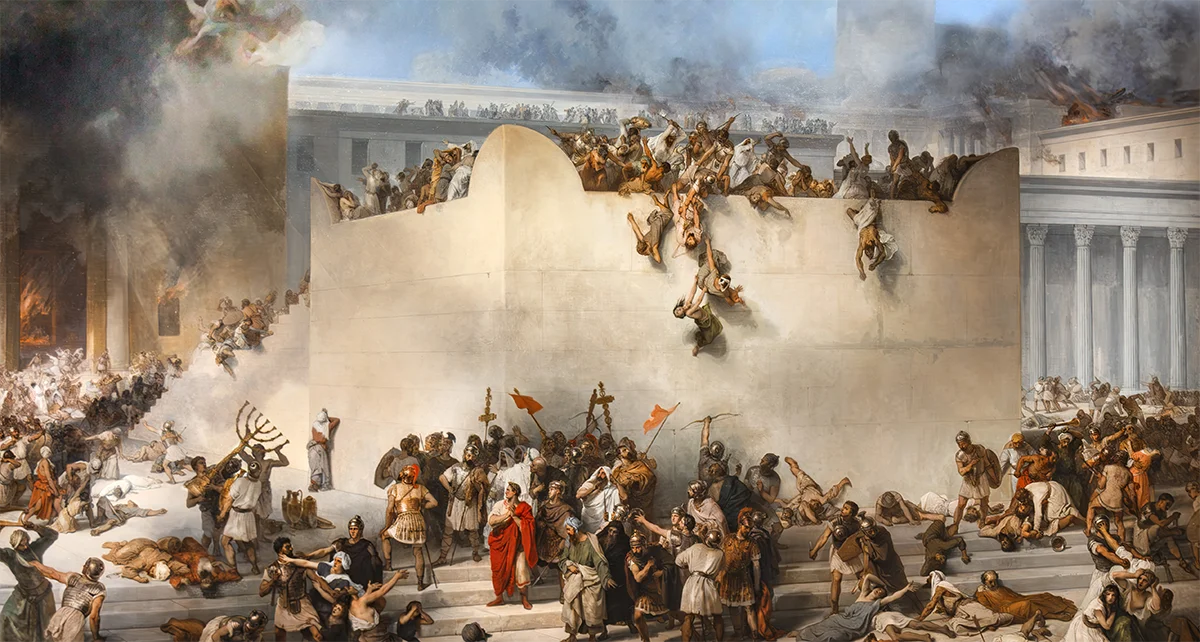
Painting by Francesco Hayez showing the destrucion of the sencond temple im the year 70 A.D.

The Error of Invented or Symbolic Obedience

Even so, many Messianic movements and groups attempting to recover elements of Israelite life have created reduced, symbolic, or reinvented forms of these laws. They hold celebrations never commanded in the Torah. They invent “festival rehearsals” and “prophetic feasts” to replace what once required sacrifices, priesthood, and a holy altar. They call their creations “obedience,” when in reality they are only human inventions dressed in biblical language. The intention may appear sincere, but the truth remains unchanged: there is no such thing as partial obedience when God has specified every detail of what He required.

The Wailling Wall Temple remnant
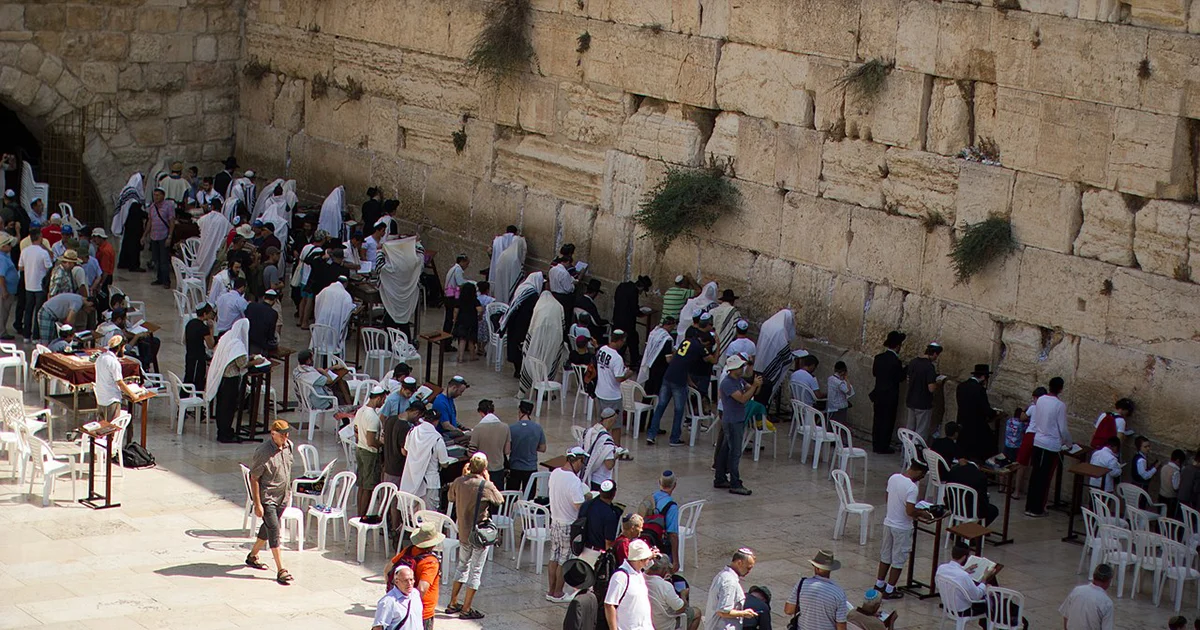
The Western Wall, also known as the Wailing Wall, is a remnant of the Temple in Jerusalem that was destroyed in the year 70 A.D. by the Romans.

Does God Accept Our Attempts to Do What He Forbade?

One of the most harmful ideas circulating today is the belief that God is pleased when we “try our best” to obey the commandments that depended on the Temple, as if the Temple’s destruction happened against His will and we, through symbolic acts, can somehow offer Him comfort. This is a grave misunderstanding. God does not need our improvisations. He does not need our symbolic substitutes. And He is not honored when we disregard His exact instructions in order to create our own versions of obedience. If God commanded that certain laws be performed only in the place He chose, with the priests He appointed, on the altar He sanctified (Deuteronomy 12:13-14), then attempting to perform them elsewhere — or in another form — is not devotion. It is disobedience. The Temple was not removed by accident; it was removed by God’s decree. Acting as if we can recreate what He Himself suspended is not faithfulness, but presumption: “Does the Lord have as much delight in burnt offerings and sacrifices as in obeying the voice of the Lord? Behold, to obey is better than a sacrifice” (1 Samuel 15:22).

Purpose of This Series

The purpose of this series is to make this truth clear. We are not rejecting any commandment. We are not diminishing the importance of the Temple. We are not choosing which laws to obey or ignore. Our goal is to show exactly what the Law commanded, how these ordinances were obeyed in the past, and why they cannot be obeyed today. We will remain faithful to the Scriptures without additions, adaptations, or human creativity (Deuteronomy 4:2;  12:32; Joshua 1:7). Every reader will understand that today’s impossibility is not rebellion, but simply the absence of the structure God Himself required.

We begin, then, with the foundation: what the Law actually commanded — and why this obedience was possible only while the Temple existed.